

Dubai Property Growth Returns: Top High-Yield Zones 2026
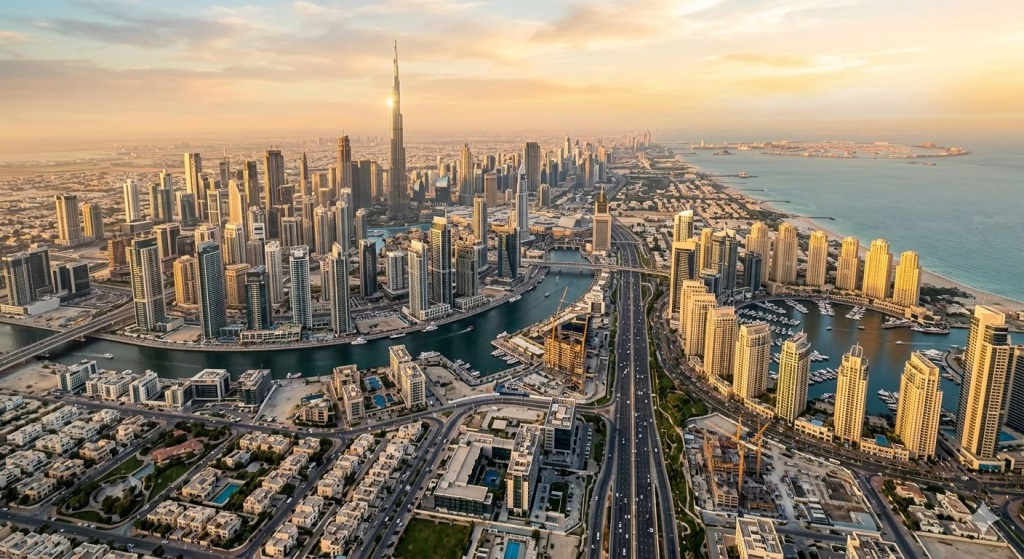
Dubai’s real estate market is entering a stronger and more mature growth cycle in 2026, creating major opportunities for investors seeking rental income and long-term appreciation. Dubai Property Growth Returns are now driven by infrastructure expansion, tenant demand, smart-city development, and long-term economic growth instead of short-term speculation. Investors are carefully studying net ROI, rental stability, service charges, and future growth corridors before purchasing property. Communities such as JVC, Dubai South, Arjan, and Dubai Silicon Oasis are emerging as high-yield investment hotspots because of their lower entry costs and stable occupancy rates. At the same time, luxury districts like Downtown Dubai and Palm Jumeirah continue attracting international investors through strong capital appreciation and tourism demand. This complete guide explains the latest Dubai property trends, ROI calculations, rental yield zones, infrastructure-driven growth areas, and future market opportunities shaping Dubai real estate investment in 2026.
Understanding Dubai’s Shifting Property Growth Returns
Dubai’s real estate market has transitioned into a healthier and more sustainable investment phase in 2026. Instead of speculative buying activity, investors are now focusing on long-term value creation and predictable cash flow. Dubai Property Growth Returns are increasingly influenced by infrastructure expansion, population growth, and strong tenant demand rather than rapid short-term price increases. This market maturity is attracting global investors who want stable rental income and long-term capital appreciation. Dubai is now viewed as a safer and more professional global real estate market compared to earlier speculative cycles.
One of the biggest reasons behind improving Dubai Property Growth Returns is the stability of rental yields across multiple communities. Citywide average rental yields remain between 5% and 9% depending on the property type, location, and asset class. Affordable and mid-market apartment zones continue delivering stronger rental percentages because of lower acquisition costs and higher occupancy rates. Premium waterfront districts still perform strongly in terms of appreciation, but their rental yields are naturally lower due to higher entry prices. This balance between appreciation and rental income is creating a healthier investment environment for long-term investors.
Another major shift influencing Dubai Property Growth Returns is the growing focus on net profitability instead of gross yield marketing. Investors are carefully deducting Dubai Land Department fees, maintenance charges, insurance costs, and management expenses before calculating actual returns. This professional investment approach is helping buyers make smarter decisions while improving market transparency. Investors now understand that real profitability depends on stable occupancy, lower operating expenses, and sustainable rental growth over time.
The maturity of the market is also improving investor confidence in Dubai Property Growth Returns. International investors are increasingly attracted to Dubai because of tax-free rental income, Golden Visa opportunities, and long-term economic diversification. As Dubai continues strengthening its business environment and infrastructure, real estate demand is expected to remain strong across residential and commercial sectors. This positions Dubai as one of the world’s leading long-term property investment destinations in 2026.
How Net ROI Is Calculated in Dubai Property Investments
Understanding true profitability is essential when analyzing Dubai Property Growth Returns. Many investors initially focus only on gross rental yield percentages without considering the actual costs involved in property ownership. However, real investment performance depends on net ROI after all recurring expenses are deducted. This includes service charges, maintenance costs, property management fees, insurance, vacancy periods, and DLD-related expenses. Investors who ignore these deductions often overestimate their real cash flow and long-term returns.
A proper calculation of Dubai Property Growth Returns starts with annual rental income. For example, if an apartment earns AED 120,000 yearly in rent with an 8% gross yield, investors must still deduct yearly ownership costs. Service charges in Dubai commonly range between AED 10 and AED 30+ per square foot depending on the building and facilities. Luxury towers with gyms, pools, concierge services, and premium amenities generally have much higher annual maintenance fees. These charges directly reduce investor profitability and should always be included in ROI calculations.
Another major factor affecting Dubai Property Growth Returns is property management cost. Investors using professional management companies usually pay around 5% of annual rent for tenant coordination, maintenance supervision, and rent collection services. Holiday home investors may pay even higher management fees, especially in tourism-focused districts. Insurance costs also impact annual cash flow because landlords must protect their properties against damage and liability risks. After deducting all these expenses, an 8% gross rental yield may realistically become a 5.5% to 6% net yield.
Professional investors analyzing Dubai Property Growth Returns now focus heavily on take-home cash flow instead of advertised returns. This shift is helping buyers identify sustainable investment opportunities with lower long-term risks. Communities with lower service charges, stable tenant demand, and lower vacancy rates often produce better actual returns than luxury districts with expensive operating costs. Investors who carefully study net ROI calculations are more likely to build profitable and sustainable property portfolios in Dubai.
Top High-Yield Zones for Apartments in 2026
Apartment communities remain one of the strongest sources of Dubai Property Growth Returns in 2026. Investors seeking passive income are increasingly targeting mid-market districts with strong tenant demand and affordable entry prices. Unlike luxury waterfront areas, these communities provide stronger rental percentages and lower vacancy risks. Working professionals, young families, and long-term expatriates continue driving demand for affordable apartments across Dubai’s expanding suburban districts. This demand is supporting stable rental growth and strong occupancy levels.
Another reason apartment communities generate strong Dubai Property Growth Returns is Dubai’s expanding population and employment growth. As industries such as technology, tourism, aviation, and logistics continue expanding, demand for practical residential housing remains high. Areas connected to business hubs and metro infrastructure are especially attractive for long-term tenants. Investors are increasingly prioritizing recurring rental income and occupancy stability over speculative appreciation alone.
Many of Dubai’s strongest apartment investment zones also benefit from lower service charges compared to luxury towers. This directly improves net rental profitability for landlords. Investors are carefully analyzing maintenance expenses, annual fees, and building occupancy levels before purchasing apartments. These financial factors are becoming more important than branding or prestige alone when evaluating long-term Dubai Property Growth Returns.
The strongest apartment communities in 2026 combine affordability, infrastructure growth, and tenant stability. Areas like JVC, Arjan, Dubai Silicon Oasis, and Dubai South continue attracting investors because they balance rental demand with future appreciation potential. These districts are expected to remain among Dubai’s most attractive buy-to-let investment markets over the coming years.
Jumeirah Village Circle (JVC) - The Consistent Yield King
Jumeirah Village Circle continues leading the market for stable Dubai Property Growth Returns because of its strong rental demand and relatively affordable property prices. JVC remains highly popular among professionals, couples, and small families looking for modern apartments outside central Dubai districts. This consistent tenant demand helps landlords maintain high occupancy rates throughout the year. Investors purchasing studios and one-bedroom apartments in JVC are often achieving gross rental yields between 7% and 9.5%.
Another major reason JVC produces strong Dubai Property Growth Returns is its ongoing infrastructure development. New schools, retail centers, healthcare facilities, and road improvements continue increasing the area’s attractiveness for long-term residents. Compared to Downtown Dubai and Dubai Marina, JVC also offers significantly lower acquisition costs per square foot. This allows investors to generate stronger rental percentages while still benefiting from appreciation potential.
Long-term tenancy stability is another advantage supporting Dubai Property Growth Returns in JVC. Unlike tourism-focused districts with seasonal demand fluctuations, JVC benefits from consistent yearly lease renewals and family occupancy. This creates predictable monthly income and lower vacancy risk for investors. Many landlords also benefit from relatively manageable service charges compared to luxury waterfront communities.
As Dubai continues expanding outward, JVC’s location and affordability are expected to strengthen future Dubai Property Growth Returns even further. Investors focused on passive income and recurring rental cash flow continue viewing JVC as one of the safest and most reliable apartment investment zones in Dubai.
Arjan & Dubai Silicon Oasis
Arjan and Dubai Silicon Oasis are rapidly emerging as strong communities for Dubai Property Growth Returns because of their affordable pricing and increasing tenant demand. Both areas continue attracting professionals, students, and families searching for lower rental costs and larger living spaces. Since purchase prices remain lower than many central Dubai districts, investors are often generating gross yields between 7% and 9% in these communities.
Infrastructure growth is also improving Dubai Property Growth Returns in both Arjan and DSO. Dubai Silicon Oasis benefits from its technology-focused business ecosystem, while Arjan is gaining popularity because of its location near Dubai Hills and major road networks. Schools, healthcare centers, retail developments, and business expansion are all increasing long-term tenant demand across these districts.
Another reason these areas generate strong Dubai Property Growth Returns is affordability. Many residents are relocating away from expensive central locations in search of lower living costs and more spacious housing. Investors entering these communities early may benefit from both rising rental demand and future appreciation potential. Lower entry prices also improve investor flexibility and portfolio diversification opportunities. Long-term demand trends suggest Arjan and Dubai Silicon Oasis will remain important apartment investment markets in the coming years. Investors looking for balanced rental income and future growth continue prioritizing these communities within their Dubai real estate portfolios
Dubai South — Infrastructure Growth Corridor
Dubai South is becoming one of the most important future zones for Dubai Property Growth Returns because of the Al Maktoum International Airport expansion project. This development is expected to transform the region into a major aviation, logistics, business, and residential hub over the next decade. Investors are increasingly targeting Dubai South because current property prices remain lower than mature central districts. Early buyers are already projecting rental yields between 7% and 8% in several apartment developments.
Expo City is also driving strong Dubai Property Growth Returns across Dubai South. Since Expo 2020, infrastructure around the area has continued expanding with new offices, schools, transportation systems, and residential communities. Tenant migration toward these emerging business zones is increasing rental demand for apartments and family housing. This trend is expected to accelerate significantly over the next several years.
One of the biggest advantages of Dubai South is the early-mover opportunity it provides investors seeking strong Dubai Property Growth Returns. Investors entering the market before full infrastructure maturity benefit from lower acquisition costs per square foot. As population growth and business activity continue increasing, property appreciation potential is expected to strengthen significantly
Premium & Luxury Yield Compression
Luxury communities such as Downtown Dubai, Dubai Marina, Palm Jumeirah, and Business Bay continue generating strong Dubai Property Growth Returns through global demand and long-term appreciation. These districts remain highly attractive for wealthy investors, international buyers, and tourism-focused property strategies. However, rental yields in premium areas are compressing slightly because property values have increased rapidly over recent years. Higher acquisition prices naturally reduce rental percentages even when annual rents remain strong.
Most premium districts currently generate Dubai Property Growth Returns between approximately 5.5% and 7% in gross rental yield terms. While these percentages are lower than mid-market apartment zones, investors often benefit from stronger appreciation and greater long-term asset stability. Luxury properties also attract global buyers seeking wealth preservation and international portfolio diversification rather than only monthly rental income.
Another reason for lower Dubai Property Growth Returns in luxury areas is the difference between rental growth and capital appreciation. In many prime communities, property prices have risen faster than rents over the past few years. This reduces yield percentages while still increasing overall property value. Investors focused on long-term appreciation may still prefer these districts because of their international prestige and strong resale demand.
Long-Term Rentals vs Holiday Home Investment Returns
One of the most important decisions affecting Dubai Property Growth Returns is choosing between long-term leasing and short-term holiday home rentals. Holiday homes in Palm Jumeirah, Downtown Dubai, and Dubai Marina can generate high seasonal revenues because of tourism demand. However, these investments also involve significantly higher operating expenses and management complexity.
Short-term rental investors seeking stronger Dubai Property Growth Returns must account for management fees ranging between 15% and 20% of annual income. Utility bills, furnishing expenses, maintenance, cleaning, and vacancy periods also reduce overall profitability. During slower tourism months, occupancy rates may decline sharply, creating inconsistent monthly cash flow for investors.
Long-term residential leasing provides more stable Dubai Property Growth Returns because tenants typically sign yearly contracts and renew leases consistently. Communities like JVC and Dubai South benefit from strong family occupancy and lower operational complexity. Investors avoid many of the recurring costs associated with holiday homes, including tourism licensing and constant guest turnover.
Many experienced investors now prefer long-term rental strategies because they create more predictable passive income. Stable occupancy, recurring lease renewals, and lower management stress make residential leasing one of the most reliable approaches for building long-term real estate wealth in Dubai.
Future Outlook for Dubai Property Growth Returns
The future of Dubai Property Growth Returns looks highly positive because Dubai continues investing heavily in infrastructure, smart-city development, tourism, and economic diversification. Population growth and international business expansion are increasing long-term demand for both residential and commercial properties. Emerging infrastructure corridors are expected to become major investment hotspots over the next decade.
Dubai South and Expo City are likely to remain central drivers of future Dubai Property Growth Returns because of ongoing transportation, aviation, and business expansion projects. Investors entering these communities early may benefit from strong appreciation and rental growth as infrastructure matures further. These areas are increasingly attracting long-term residents and international businesses relocating closer to future employment hubs.
Technology and sustainability trends are also influencing future Dubai Property Growth Returns. Smart communities with digital infrastructure, green spaces, energy-efficient systems, and modern transportation access are becoming more attractive to both tenants and investors. These features are expected to support stronger occupancy and higher long-term property values.
Frequently Asked Questions
- What are Dubai Property Growth Returns?
Dubai Property Growth Returns refer to rental income and capital appreciation generated from Dubai real estate investments after calculating all ownership expenses. - What is the average rental yield in Dubai?
Gross rental yields in Dubai generally range between 5% and 9%, depending on the location and property type. - Which areas offer the best Dubai Property Growth Returns?
Dubai South, JVC, Arjan, Al Furjan, and Expo City are among the strongest high-yield investment areas in 2026. - Are long-term rentals better than holiday homes?
Long-term rentals usually provide more stable and predictable income, while holiday homes may generate higher gross revenue but involve higher operational costs. - Why is Dubai South becoming popular?
The Al Maktoum Airport expansion and Expo City growth are increasing demand and future appreciation potential in Dubai South.
Conclusion
The future of Dubai Property Growth Returns looks highly promising because Dubai continues combining tax-free rental income, infrastructure expansion, and strong international investor demand. Emerging growth corridors linked to Expo City and Al Maktoum Airport are creating major opportunities for early investors seeking long-term appreciation and high rental yields. At the same time, stable residential communities with strong tenant demand are providing predictable passive income opportunities for long-term wealth building.
Investors who focus on true net profitability instead of headline rental percentages are more likely to succeed with Dubai Property Growth Returns. Understanding service charges, maintenance expenses, vacancy risks, and regulatory updates helps investors build more sustainable and profitable portfolios. Explore our other Dubai investment guides, rental yield analysis articles, and infrastructure growth reports to discover more opportunities shaping the future of UAE real estate investment.
Top Property Developers in Dubai
Dubai Property Growth Returns: Top High-Yield Zones 2026
Dubai’s real estate market is entering a stronger and more mature growth cycle in 2026, creating major opportunities for investors seeking rental income and long-term appreciation. Dubai Property Growth Returns are now driven by infrastructure expansion, tenant demand, smart-city development, and long-term economic growth instead of short-term speculation. Investors are carefully studying net ROI, rental stability, service charges, and future growth corridors before purchasing property. Communities such as JVC, Dubai South, Arjan, and Dubai Silicon Oasis are emerging as high-yield investment hotspots because of their lower entry costs and stable occupancy rates. At the same time, luxury districts like Downtown Dubai and Palm Jumeirah continue attracting international investors through strong capital appreciation and tourism demand. This complete guide explains the latest Dubai property trends, ROI calculations, rental yield zones, infrastructure-driven growth areas, and future market opportunities shaping Dubai real estate investment in 2026.
Understanding Dubai’s Shifting Property Growth Returns
Dubai’s real estate market has transitioned into a healthier and more sustainable investment phase in 2026. Instead of speculative buying activity, investors are now focusing on long-term value creation and predictable cash flow. Dubai Property Growth Returns are increasingly influenced by infrastructure expansion, population growth, and strong tenant demand rather than rapid short-term price increases. This market maturity is attracting global investors who want stable rental income and long-term capital appreciation. Dubai is now viewed as a safer and more professional global real estate market compared to earlier speculative cycles.
One of the biggest reasons behind improving Dubai Property Growth Returns is the stability of rental yields across multiple communities. Citywide average rental yields remain between 5% and 9% depending on the property type, location, and asset class. Affordable and mid-market apartment zones continue delivering stronger rental percentages because of lower acquisition costs and higher occupancy rates. Premium waterfront districts still perform strongly in terms of appreciation, but their rental yields are naturally lower due to higher entry prices. This balance between appreciation and rental income is creating a healthier investment environment for long-term investors.
Another major shift influencing Dubai Property Growth Returns is the growing focus on net profitability instead of gross yield marketing. Investors are carefully deducting Dubai Land Department fees, maintenance charges, insurance costs, and management expenses before calculating actual returns. This professional investment approach is helping buyers make smarter decisions while improving market transparency. Investors now understand that real profitability depends on stable occupancy, lower operating expenses, and sustainable rental growth over time.
The maturity of the market is also improving investor confidence in Dubai Property Growth Returns. International investors are increasingly attracted to Dubai because of tax-free rental income, Golden Visa opportunities, and long-term economic diversification. As Dubai continues strengthening its business environment and infrastructure, real estate demand is expected to remain strong across residential and commercial sectors. This positions Dubai as one of the world’s leading long-term property investment destinations in 2026.
How Net ROI Is Calculated in Dubai Property Investments
Understanding true profitability is essential when analyzing Dubai Property Growth Returns. Many investors initially focus only on gross rental yield percentages without considering the actual costs involved in property ownership. However, real investment performance depends on net ROI after all recurring expenses are deducted. This includes service charges, maintenance costs, property management fees, insurance, vacancy periods, and DLD-related expenses. Investors who ignore these deductions often overestimate their real cash flow and long-term returns.
A proper calculation of Dubai Property Growth Returns starts with annual rental income. For example, if an apartment earns AED 120,000 yearly in rent with an 8% gross yield, investors must still deduct yearly ownership costs. Service charges in Dubai commonly range between AED 10 and AED 30+ per square foot depending on the building and facilities. Luxury towers with gyms, pools, concierge services, and premium amenities generally have much higher annual maintenance fees. These charges directly reduce investor profitability and should always be included in ROI calculations.
Another major factor affecting Dubai Property Growth Returns is property management cost. Investors using professional management companies usually pay around 5% of annual rent for tenant coordination, maintenance supervision, and rent collection services. Holiday home investors may pay even higher management fees, especially in tourism-focused districts. Insurance costs also impact annual cash flow because landlords must protect their properties against damage and liability risks. After deducting all these expenses, an 8% gross rental yield may realistically become a 5.5% to 6% net yield.
Professional investors analyzing Dubai Property Growth Returns now focus heavily on take-home cash flow instead of advertised returns. This shift is helping buyers identify sustainable investment opportunities with lower long-term risks. Communities with lower service charges, stable tenant demand, and lower vacancy rates often produce better actual returns than luxury districts with expensive operating costs. Investors who carefully study net ROI calculations are more likely to build profitable and sustainable property portfolios in Dubai.
Top High-Yield Zones for Apartments in 2026
Apartment communities remain one of the strongest sources of Dubai Property Growth Returns in 2026. Investors seeking passive income are increasingly targeting mid-market districts with strong tenant demand and affordable entry prices. Unlike luxury waterfront areas, these communities provide stronger rental percentages and lower vacancy risks. Working professionals, young families, and long-term expatriates continue driving demand for affordable apartments across Dubai’s expanding suburban districts. This demand is supporting stable rental growth and strong occupancy levels.
Another reason apartment communities generate strong Dubai Property Growth Returns is Dubai’s expanding population and employment growth. As industries such as technology, tourism, aviation, and logistics continue expanding, demand for practical residential housing remains high. Areas connected to business hubs and metro infrastructure are especially attractive for long-term tenants. Investors are increasingly prioritizing recurring rental income and occupancy stability over speculative appreciation alone.
Many of Dubai’s strongest apartment investment zones also benefit from lower service charges compared to luxury towers. This directly improves net rental profitability for landlords. Investors are carefully analyzing maintenance expenses, annual fees, and building occupancy levels before purchasing apartments. These financial factors are becoming more important than branding or prestige alone when evaluating long-term Dubai Property Growth Returns.
The strongest apartment communities in 2026 combine affordability, infrastructure growth, and tenant stability. Areas like JVC, Arjan, Dubai Silicon Oasis, and Dubai South continue attracting investors because they balance rental demand with future appreciation potential. These districts are expected to remain among Dubai’s most attractive buy-to-let investment markets over the coming years.
Jumeirah Village Circle (JVC) - The Consistent Yield King
Jumeirah Village Circle continues leading the market for stable Dubai Property Growth Returns because of its strong rental demand and relatively affordable property prices. JVC remains highly popular among professionals, couples, and small families looking for modern apartments outside central Dubai districts. This consistent tenant demand helps landlords maintain high occupancy rates throughout the year. Investors purchasing studios and one-bedroom apartments in JVC are often achieving gross rental yields between 7% and 9.5%.
Another major reason JVC produces strong Dubai Property Growth Returns is its ongoing infrastructure development. New schools, retail centers, healthcare facilities, and road improvements continue increasing the area’s attractiveness for long-term residents. Compared to Downtown Dubai and Dubai Marina, JVC also offers significantly lower acquisition costs per square foot. This allows investors to generate stronger rental percentages while still benefiting from appreciation potential.
Long-term tenancy stability is another advantage supporting Dubai Property Growth Returns in JVC. Unlike tourism-focused districts with seasonal demand fluctuations, JVC benefits from consistent yearly lease renewals and family occupancy. This creates predictable monthly income and lower vacancy risk for investors. Many landlords also benefit from relatively manageable service charges compared to luxury waterfront communities.
As Dubai continues expanding outward, JVC’s location and affordability are expected to strengthen future Dubai Property Growth Returns even further. Investors focused on passive income and recurring rental cash flow continue viewing JVC as one of the safest and most reliable apartment investment zones in Dubai.
Arjan & Dubai Silicon Oasis
Arjan and Dubai Silicon Oasis are rapidly emerging as strong communities for Dubai Property Growth Returns because of their affordable pricing and increasing tenant demand. Both areas continue attracting professionals, students, and families searching for lower rental costs and larger living spaces. Since purchase prices remain lower than many central Dubai districts, investors are often generating gross yields between 7% and 9% in these communities.
Infrastructure growth is also improving Dubai Property Growth Returns in both Arjan and DSO. Dubai Silicon Oasis benefits from its technology-focused business ecosystem, while Arjan is gaining popularity because of its location near Dubai Hills and major road networks. Schools, healthcare centers, retail developments, and business expansion are all increasing long-term tenant demand across these districts.
Another reason these areas generate strong Dubai Property Growth Returns is affordability. Many residents are relocating away from expensive central locations in search of lower living costs and more spacious housing. Investors entering these communities early may benefit from both rising rental demand and future appreciation potential. Lower entry prices also improve investor flexibility and portfolio diversification opportunities. Long-term demand trends suggest Arjan and Dubai Silicon Oasis will remain important apartment investment markets in the coming years. Investors looking for balanced rental income and future growth continue prioritizing these communities within their Dubai real estate portfolios
Dubai South — Infrastructure Growth Corridor
Dubai South is becoming one of the most important future zones for Dubai Property Growth Returns because of the Al Maktoum International Airport expansion project. This development is expected to transform the region into a major aviation, logistics, business, and residential hub over the next decade. Investors are increasingly targeting Dubai South because current property prices remain lower than mature central districts. Early buyers are already projecting rental yields between 7% and 8% in several apartment developments.
Expo City is also driving strong Dubai Property Growth Returns across Dubai South. Since Expo 2020, infrastructure around the area has continued expanding with new offices, schools, transportation systems, and residential communities. Tenant migration toward these emerging business zones is increasing rental demand for apartments and family housing. This trend is expected to accelerate significantly over the next several years.
One of the biggest advantages of Dubai South is the early-mover opportunity it provides investors seeking strong Dubai Property Growth Returns. Investors entering the market before full infrastructure maturity benefit from lower acquisition costs per square foot. As population growth and business activity continue increasing, property appreciation potential is expected to strengthen significantly
Premium & Luxury Yield Compression
Luxury communities such as Downtown Dubai, Dubai Marina, Palm Jumeirah, and Business Bay continue generating strong Dubai Property Growth Returns through global demand and long-term appreciation. These districts remain highly attractive for wealthy investors, international buyers, and tourism-focused property strategies. However, rental yields in premium areas are compressing slightly because property values have increased rapidly over recent years. Higher acquisition prices naturally reduce rental percentages even when annual rents remain strong.
Most premium districts currently generate Dubai Property Growth Returns between approximately 5.5% and 7% in gross rental yield terms. While these percentages are lower than mid-market apartment zones, investors often benefit from stronger appreciation and greater long-term asset stability. Luxury properties also attract global buyers seeking wealth preservation and international portfolio diversification rather than only monthly rental income.
Another reason for lower Dubai Property Growth Returns in luxury areas is the difference between rental growth and capital appreciation. In many prime communities, property prices have risen faster than rents over the past few years. This reduces yield percentages while still increasing overall property value. Investors focused on long-term appreciation may still prefer these districts because of their international prestige and strong resale demand.
Long-Term Rentals vs Holiday Home Investment Returns
One of the most important decisions affecting Dubai Property Growth Returns is choosing between long-term leasing and short-term holiday home rentals. Holiday homes in Palm Jumeirah, Downtown Dubai, and Dubai Marina can generate high seasonal revenues because of tourism demand. However, these investments also involve significantly higher operating expenses and management complexity.
Short-term rental investors seeking stronger Dubai Property Growth Returns must account for management fees ranging between 15% and 20% of annual income. Utility bills, furnishing expenses, maintenance, cleaning, and vacancy periods also reduce overall profitability. During slower tourism months, occupancy rates may decline sharply, creating inconsistent monthly cash flow for investors.
Long-term residential leasing provides more stable Dubai Property Growth Returns because tenants typically sign yearly contracts and renew leases consistently. Communities like JVC and Dubai South benefit from strong family occupancy and lower operational complexity. Investors avoid many of the recurring costs associated with holiday homes, including tourism licensing and constant guest turnover.
Many experienced investors now prefer long-term rental strategies because they create more predictable passive income. Stable occupancy, recurring lease renewals, and lower management stress make residential leasing one of the most reliable approaches for building long-term real estate wealth in Dubai.
Future Outlook for Dubai Property Growth Returns
The future of Dubai Property Growth Returns looks highly positive because Dubai continues investing heavily in infrastructure, smart-city development, tourism, and economic diversification. Population growth and international business expansion are increasing long-term demand for both residential and commercial properties. Emerging infrastructure corridors are expected to become major investment hotspots over the next decade.
Dubai South and Expo City are likely to remain central drivers of future Dubai Property Growth Returns because of ongoing transportation, aviation, and business expansion projects. Investors entering these communities early may benefit from strong appreciation and rental growth as infrastructure matures further. These areas are increasingly attracting long-term residents and international businesses relocating closer to future employment hubs.
Technology and sustainability trends are also influencing future Dubai Property Growth Returns. Smart communities with digital infrastructure, green spaces, energy-efficient systems, and modern transportation access are becoming more attractive to both tenants and investors. These features are expected to support stronger occupancy and higher long-term property values.
Frequently Asked Questions
- What are Dubai Property Growth Returns?
Dubai Property Growth Returns refer to rental income and capital appreciation generated from Dubai real estate investments after calculating all ownership expenses. - What is the average rental yield in Dubai?
Gross rental yields in Dubai generally range between 5% and 9%, depending on the location and property type. - Which areas offer the best Dubai Property Growth Returns?
Dubai South, JVC, Arjan, Al Furjan, and Expo City are among the strongest high-yield investment areas in 2026. - Are long-term rentals better than holiday homes?
Long-term rentals usually provide more stable and predictable income, while holiday homes may generate higher gross revenue but involve higher operational costs. - Why is Dubai South becoming popular?
The Al Maktoum Airport expansion and Expo City growth are increasing demand and future appreciation potential in Dubai South.
Conclusion
The future of Dubai Property Growth Returns looks highly promising because Dubai continues combining tax-free rental income, infrastructure expansion, and strong international investor demand. Emerging growth corridors linked to Expo City and Al Maktoum Airport are creating major opportunities for early investors seeking long-term appreciation and high rental yields. At the same time, stable residential communities with strong tenant demand are providing predictable passive income opportunities for long-term wealth building.
Investors who focus on true net profitability instead of headline rental percentages are more likely to succeed with Dubai Property Growth Returns. Understanding service charges, maintenance expenses, vacancy risks, and regulatory updates helps investors build more sustainable and profitable portfolios. Explore our other Dubai investment guides, rental yield analysis articles, and infrastructure growth reports to discover more opportunities shaping the future of UAE real estate investment.
Top Property Developers in Dubai
Our platform provides off-plan and resale opportunities, joint ventures, developer partnerships, and comprehensive property services.